

If you have ever wondered why gallery-quality art prints look richer, smoother, and more refined than ordinary posters, the answer often comes down to the printing method, the paper, and the way the final piece is framed. This guide explains what giclée printing is, why it matters for fine art reproduction, and what people really mean by museum-grade framing.
What is giclée printing?
Giclée printing is a high-quality inkjet printing process commonly used for fine art reproductions, photography, illustration, and collectible prints. Unlike ordinary office or poster printing, giclée production focuses on color accuracy, tonal smoothness, fine detail, and long-term presentation quality.
In practice, a high-quality giclée workflow usually combines a professional wide-format printer, pigment-based inks, carefully selected fine art papers or canvas, and a controlled color-management process.
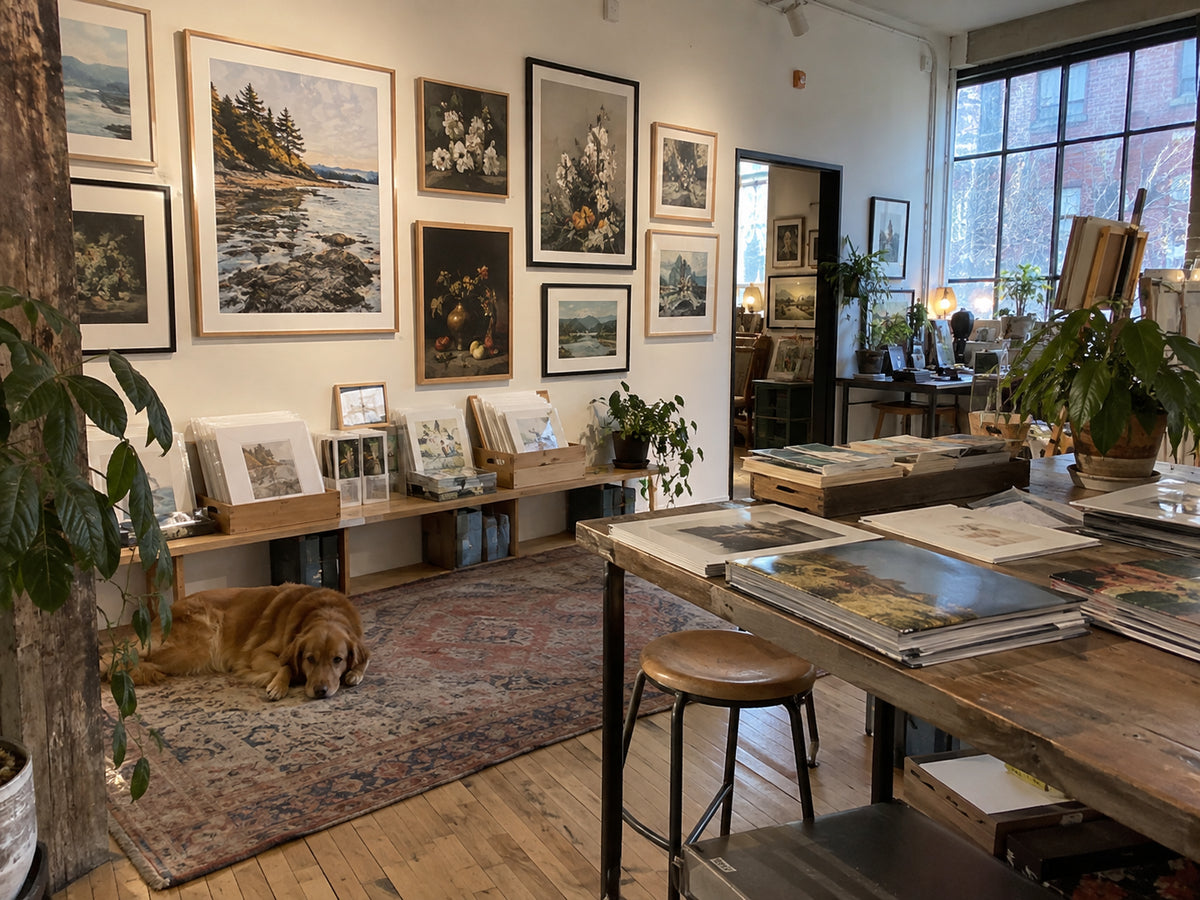
A finished fine art print is the result of printing, material selection, color management, and presentation working together.
Why artists and photographers choose giclée
- Fine detail: subtle texture, linework, and photographic detail are reproduced more accurately.
- Smoother tonal transitions: especially important in skin tones, skies, gradients, and monochrome work.
- Wider color expression: professional pigment-ink systems can reproduce a broader and more nuanced range of colors.
- Paper choice: cotton rag, textured watercolor-style papers, baryta papers, canvas, and other archival media can dramatically change the final look.
- Better long-term presentation: when paired with suitable archival materials and display conditions, fine art prints are designed for serious long-term use.
Pigment ink vs ordinary dye ink
One of the biggest differences in professional fine art printing is the use of pigment-based ink. Pigment inks are commonly chosen for exhibition, gallery, photographic, and fine art applications because they are developed for stronger color stability and professional image permanence than basic consumer printing systems.
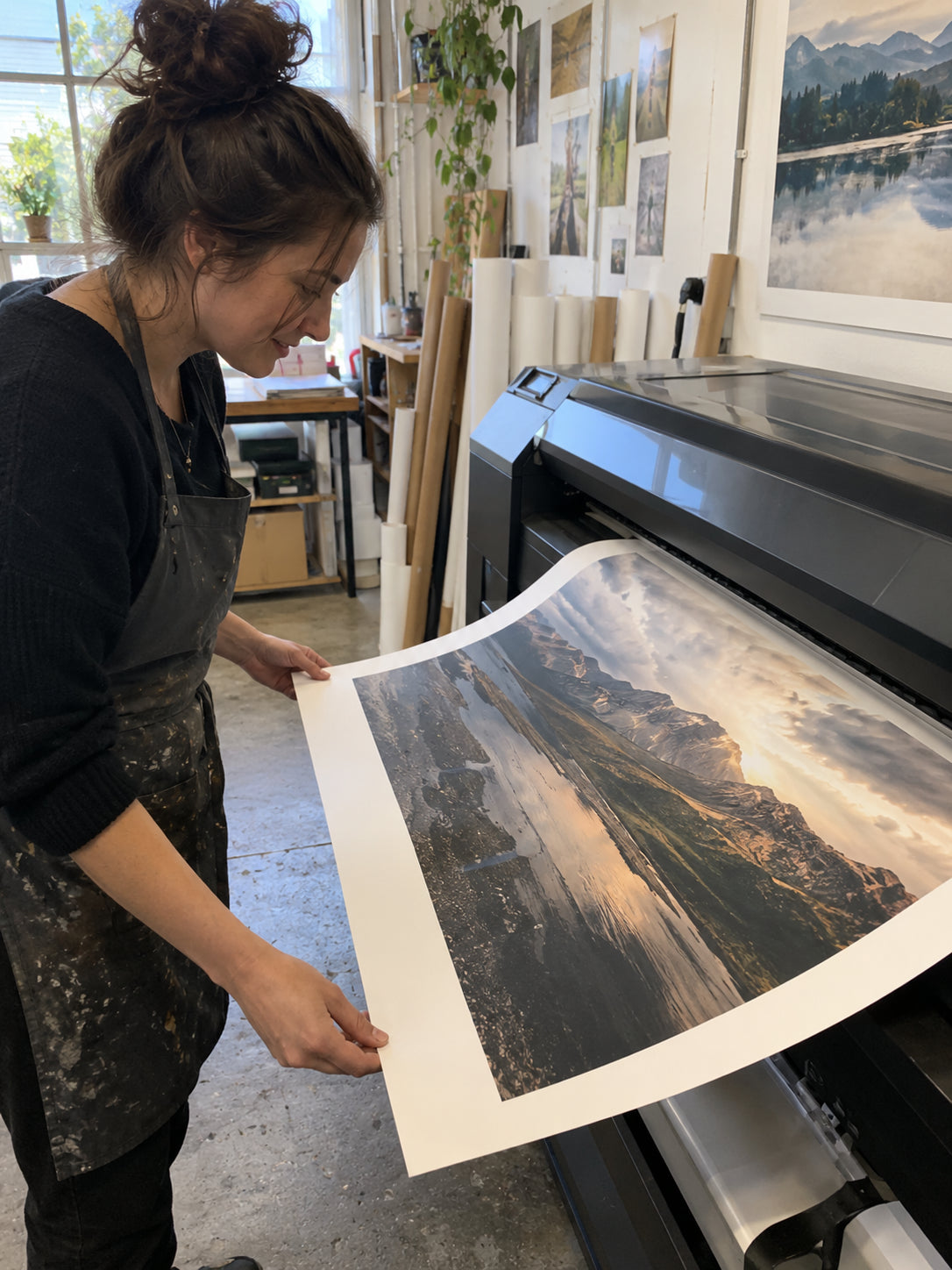
But ink alone does not define a museum-quality print. The paper, coating, storage environment, light exposure, humidity, mounting method, and glazing all affect how well a print ages.
Why fine art paper matters
Paper is not just a surface. It is part of the image. A smooth matte paper can create a clean contemporary look; a textured cotton rag paper can give illustrations and paintings a more tactile, handcrafted quality; baryta-style papers are often chosen for photographs because of their depth and tonal richness.
For collectible and conservation-minded work, many artists prefer papers designed to be acid-free, lignin-free, or otherwise suitable for archival presentation.
What does “museum-grade framing” actually mean?
The phrase museum-grade framing is often used loosely in marketing. In a more meaningful sense, it refers to framing methods and materials selected to protect the artwork while allowing it to be displayed safely and beautifully.
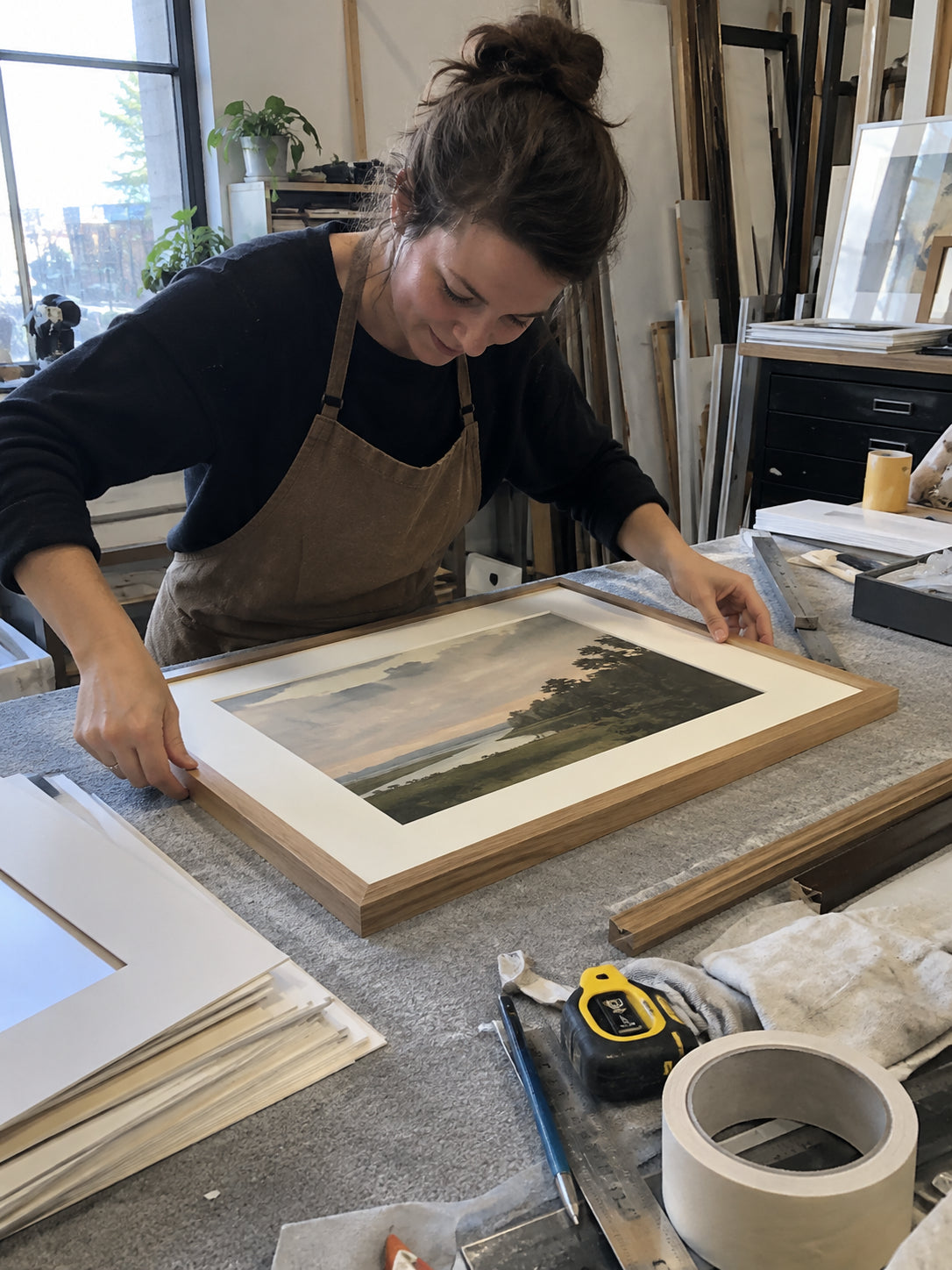
Acid-free or archival-quality mount board helps reduce harmful contact with unstable materials.
Good conservation practice avoids permanently damaging the artwork whenever possible.
UV-filtering glass or acrylic can reduce exposure to damaging ultraviolet light.
The artwork should generally not be pressed directly against glazing, especially for works on paper.
Why UV filtering matters
Light is one of the main causes of fading and material degradation. UV-filtering glazing can help reduce ultraviolet exposure, but it does not make artwork immune to fading. Strong sunlight, high heat, and prolonged exposure should still be avoided.
Museum-grade framing is a system, not a single product
A premium frame alone does not create conservation framing. The protection comes from the entire construction: the backing, mounting method, mat board, glazing, spacing, sealing, hardware, and environmental conditions all work together.
That is why professional framing is especially important for signed prints, limited editions, collectible photography, original works on paper, certificates, and pieces intended for long-term display.
Should I frame an original family photograph or a copy?
For an irreplaceable family photograph, consider displaying a reproduction and storing the original in suitable preservation conditions. The Library of Congress photograph-care guidance recommends this approach for photographs with personal, historic or monetary value: light damage accumulates even behind UV-filtering glazing.
A window mat or frame spacers can keep a photograph from touching the glazing. This is a preservation consideration, not a guarantee that any frame or print will never fade. If you already have a digital image for display, our photo printing and framing guide explains the file, size and presentation details to prepare.
Giclée + conservation framing: when the combination makes sense
If the artwork has emotional, artistic, or collectible value, combining fine art printing with conservation-minded framing creates a much stronger final product than treating printing and framing as separate afterthoughts. Color accuracy, material quality, and protection all contribute to how the work looks today and how well it may hold up over time.
At BiuPicture
We specialize in fine art printing, photographic printing, custom framing, and presentation solutions for artists, photographers, collectors, studios, exhibitions, and custom projects. From paper selection to framing structure, our goal is to help each image look intentional, refined, and professionally finished.
Final takeaway
Giclée printing is not simply “high-resolution printing.” It is a complete fine art production approach built around image quality, color management, professional inks, and carefully selected media. Likewise, museum-grade framing is not just a premium frame—it is a conservation-oriented system designed to protect and present artwork responsibly.
When both are done well, the result is a print that feels less like a poster and more like a finished artwork.
Explore custom fine art printing, custom framing or our fine art print collection.


